Managing a warehouse in today’s fast-moving digital world requires more than just space and manpower, it demands intelligent, flexible, and automated systems. This is where SAP Extended Warehouse Management (SAP EWM) becomes a game-changer.
In this detailed blog, let’s explore what SAP EWM is, how it works, its features, and the benefits it brings to modern organizations.
What Is EWM?
SAP EWM (Extended Warehouse Management) is an advanced system designed to help organizations manage complex warehouse operations. It goes beyond basic inventory control and offers end-to-end visibility and automation for all warehouse processes.
In simple terms, SAP S4HANA EWM ensures that the right product is in the right place at the right time, with maximum efficiency.
Why Does SAP EWM Matters Today?
Today’s warehouses need to work faster and handle more orders than ever before. Customers expect quick deliveries and zero mistakes. It helps businesses manage these challenges by improving order accuracy, reducing delays, and making daily warehouse operations smoother.
It also supports automation and gives real-time updates, which is very useful for big companies that manage large warehouses, distribution centers, or multiple storage locations.
Core Features
Advanced Warehouse Processes:
- Inbound Processing – Inbound processing starts when goods arrive at the warehouse. SAP EWM creates inbound delivery documents, assigns suitable storage bins, and checks the quantity and quality of the items. This ensures a smooth and error-free goods receipt process.
- Outbound Processing – Outbound processing handles all activities related to customer orders or stock transfers. EWM guides warehouse staff in picking the correct products, packing and staging them, and completing the goods issue. It also generates all required shipping documents for accurate delivery.
- Internal Warehouse Movements – Internal warehouse movements include all product transfers happening inside the warehouse. SAP EWM manages tasks like replenishing stock, rearranging items, and shifting inventory between storage areas. This keeps the warehouse organized and running efficiently.
Slotting and Rearrangement: Intelligently determines the best storage location for each product to make picking faster and more efficient. It does this by analyzing factors like how often the product is needed, its size, and how frequently it is picked. By placing items in the most suitable spots, the system helps reduce travel time and improves overall warehouse productivity.
Warehouse Automation: Supports warehouse automation by connecting with systems like conveyors, Automated Storage and Retrieval Systems (ASRS), and robots or automated guided vehicles (AGVs). These technologies help handle goods more quickly and accurately. As a result, errors are reduced, and warehouse operations become much faster and more efficient.
Labor Management: Improves how the workforce is utilized by tracking employee performance, assigning tasks efficiently, and reducing idle time. This helps ensure that the right people are working on the right tasks at the right moment, increasing overall productivity.
Wave Management: Wave management allows SAP EWM to group multiple orders and process them together in batches or “waves.” This helps plan work more effectively, especially during busy hours, ensuring faster and more organized order fulfillment.
Yard Management: With yard management, SAP EWM controls the movement of vehicles within the warehouse yard. It manages dock door assignments, vehicle check-ins and check-outs, and other yard-related tasks, ensuring smooth flow and reducing delays.
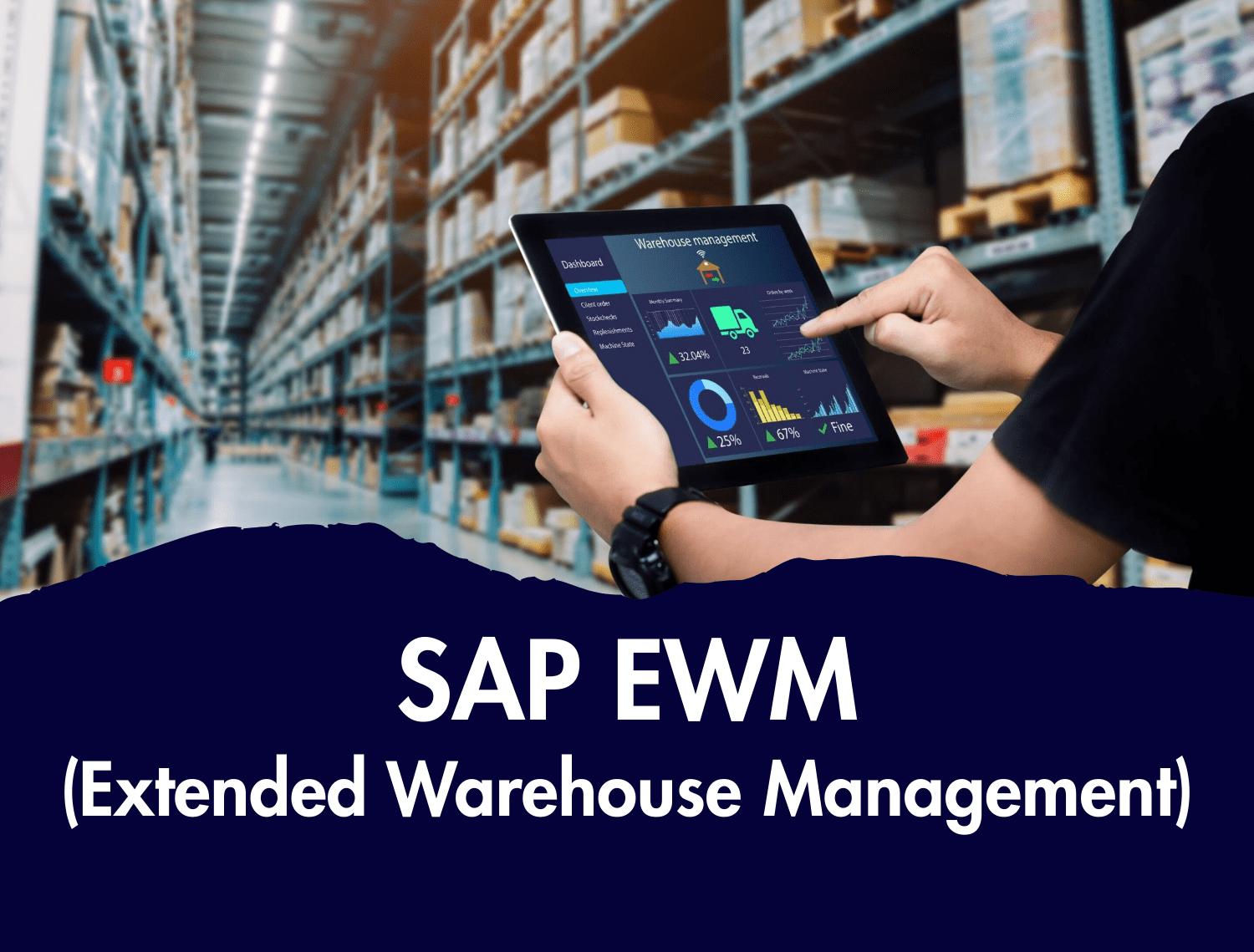
Analytics & Reporting: Provides real-time dashboards that display key information like inventory levels, order status, operational KPIs, and task performance. These insights help managers and decision-makers act quickly and make more informed choices to improve warehouse operations.
Benefits
- Increased Efficiency : SAP EWM boosts overall efficiency by automating many warehouse tasks that were earlier done manually. This reduces time spent on repetitive activities and allows employees to focus on more important work. As a result, operations move faster and become more organized.
- Reduced Operational Costs: By optimizing labor usage, minimizing errors, and ensuring better use of warehouse space, SAP EWM helps significantly cut down operational costs. Fewer mistakes mean less rework, and better planning reduces unnecessary labor hours and storage expenses.
- Real-Time Visibility: Provides live updates on inventory, orders, and warehouse activities. This real-time visibility enables managers to make quick decisions, solve issues immediately, and keep operations running smoothly without delays.
- Better Resource Planning: The system helps plan and allocate resources such as manpower, forklifts, and equipment based on actual workload. This ensures that busy periods are properly staffed and resources are not wasted during slow periods, leading to more balanced and efficient operations.
- Higher Accuracy: Automation reduces the chances of human error in processes like picking, packing, and stock counting. With more accurate data and fewer mistakes, inventory levels stay correct, and customer orders are fulfilled more reliably.
Who Should Use SAP EWM?
SAP EWM is especially useful for industries that manage large-scale warehouse operations. This includes retail and eCommerce, manufacturing, pharmaceuticals, automotive, and FMCG or food processing companies.
It is ideal for businesses with large warehouses, multi-location distribution centers, or high-volume logistics. Companies that plan to scale their operations or improve warehouse efficiency can greatly benefit from implementing EWM. It helps manage complexity, improve accuracy, and streamline warehouse processes.
SAP EWM is not just a warehouse solution, it is a digital backbone for modern, intelligent, and automated warehouse operations. Whether it’s managing inbound goods, optimizing storage, or ensuring timely deliveries, it empowers organizations with real-time insights and enhanced productivity.
If your business aims to streamline warehouse operations, improve accuracy, and reduce costs, SAP EWM is a powerful, future-ready solution worth implementing.
FAQs
- What is EWM?
SAP Extended Warehouse Management (EWM) is an advanced warehouse solution that manages complex logistics, improves inventory accuracy, and optimizes end-to-end warehouse operations.
- Difference between WM & EWM?
SAP WM is a basic warehouse module, while SAP EWM offers advanced, flexible, and automated capabilities such as real-time visibility, labor management, and high-volume warehouse handling.
- Who can learn EWM?
Anyone from supply chain, logistics, warehouse operations, SAP MM/WM background, or freshers interested in warehouse management can learn EWM.
- Is the SAP Global Certification available in EWM?
Yes, SAP offers official global certification for SAP EWM under the Supply Chain Management (SCM) and S/4HANA tracks.
- Can SAP EWM integrate with other systems?
Yes, it integrates with SAP TM, MM, SD, PP, and external systems like WCS and automation tools.