Top SAP Interview Questions and Answers (All Modules Covered)
Here’s a curated set of the most frequently asked SAP interview questions, spanning General SAP concepts, FICO, SD, MM, ABAP, HCM, Basis, and S/4HANA — ideal for quick revision before your interview.
General SAP & S/4HANA
1. What is SAP and why is it widely used?
SAP is an ERP (Enterprise Resource Planning) software that integrates core business processes — finance, sales, procurement, production, and HR — into one unified platform. It improves data accuracy, eliminates departmental silos, and enables real-time decision-making.
2. What is the difference between SAP ECC and SAP S/4HANA?
SAP ECC runs on traditional relational databases with batch-heavy processing and complex data structures. S/4HANA runs on the in-memory HANA database, offering real-time analytics, a simplified data model, and a Fiori-based user interface instead of classic SAP GUI transactions.
3. What is SAP Fiori?
Fiori is SAP’s modern, role-based user interface used across S/4HANA. It offers responsive, mobile-friendly apps for tasks like managing sales orders, approvals, and dashboards, replacing many traditional GUI transaction screens.
4. Explain SAP’s three-tier architecture?
It consists of the Presentation layer (user interface), Application layer (business logic and processing), and Database layer (data storage). This separation allows scalability and centralized data management.
5. What are the different types of SAP modules?
SAP modules are broadly divided into Functional modules (FICO, SD, MM, HCM, PP) which handle business processes, and Technical modules (ABAP, Basis, NetWeaver) which handle development, customization, and system administration.
SAP FICO
6. What is a Company Code in SAP FI?
A Company Code is the smallest organizational unit in Financial Accounting for which a complete set of financial statements — balance sheet and profit & loss — can be generated.
7. What is a Fiscal Year Variant?
It defines the start and end dates of a company’s accounting year, along with posting periods and special periods for year-end adjustments, ensuring accurate and legally compliant financial reporting.
8. What is Credit Control in SAP FI?
Credit Control is a risk management practice where the system automatically checks a customer’s credit limit against their outstanding orders, deliveries, and invoices before allowing further transactions.
9. What is the difference between Company Code and Controlling Area?
Company Code is a Financial Accounting unit used for external reporting, while Controlling Area is used for internal cost tracking and management reporting, and can span across multiple company codes.
SAP SD (Sales and Distribution)
10. What is the Order-to-Cash (O2C) cycle?
O2C is the end-to-end sales process starting from customer inquiry and sales order creation, through delivery and billing, and ending with payment collection — integrating SD with FI for revenue and receivables posting.
11. What is a Distribution Channel in SAP SD?
It defines how a company sells and delivers products — such as direct sales, wholesale, retail, or online — and controls pricing, discounts, and customer-specific sales conditions for that channel.
12. What are Partner Functions in SAP SD?
Partner Functions define the roles different business partners play in a sales transaction — such as who places the order (sold-to), who receives goods (ship-to), who is billed, and who pays.
13. How would you troubleshoot a pricing issue in a sales order?
Start by checking pricing procedure determination — verify the Sales Area, Customer Pricing Procedure in the customer master, and Document Pricing Procedure on the sales document type, since a mismatch here typically prevents pricing from triggering correctly.
SAP MM (Materials Management)
14. What is the Procure-to-Pay (P2P) cycle?
P2P covers the entire procurement process — from purchase requisition and purchase order creation, through goods receipt and invoice verification, to final vendor payment.
15. How is pricing calculated in a Purchase Order?
Pricing is built using a Pricing Procedure made up of Condition Types, Access Sequences, and Condition Tables. The system pulls prices from Purchasing Info Records, Contracts, or Scheduling Agreements to arrive at the final net price.
16. How would you reverse an incorrect Goods Receipt?
First identify the movement type and material document from the original GR posting, then reverse it using the corresponding reversal movement type (e.g., 102 for a 101 GR), ensuring inventory and FI postings are corrected accordingly.
SAP ABAP
17. What is an Internal Table in ABAP, and why does its type matter for performance?
An internal table is a temporary, in-memory data structure used to process data during program execution. Choosing the right type — standard, sorted, or hashed — significantly affects performance, especially for large data reads using binary search or key-based access.
18. What is SAP Script used for?
SAP Script is a tool for designing and managing formatted business documents like invoices, purchase orders, and delivery notes, allowing custom layouts tied to business transactions.
SAP HCM & Basis
19. What is the difference between Personnel Administration and Organizational Management in SAP HCM?
Personnel Administration manages individual employee master data (personal details, contracts, payroll info), while Organizational Management handles the structural side — org units, positions, and reporting hierarchies.
20. What is a Transport Request in SAP Basis?
A Transport Request is used to move configuration or development changes from one SAP system to another (e.g., Development to Quality to Production) in a controlled, auditable way, ensuring changes are tested before reaching the live system.
21. What is Master Data in SAP?
Master Data is permanent business data used across multiple transactions. Examples include Customer Master, Vendor Master, Material Master, G/L Accounts, and Employee Master. It is created once and reused throughout the system.
22. What is Transaction Data?
Transaction Data is generated during day-to-day business operations. Examples include Sales Orders, Purchase Orders, Goods Receipts, Invoices, and Journal Entries.
23. What is a Client in SAP?
A Client is the highest organizational unit in SAP. It contains its own master data, users, and configuration. Multiple clients can exist within one SAP system for development, testing, and production.
24. What is SAP HANA, and why is it faster?
SAP HANA is an in-memory database that stores data in RAM rather than on disk. This enables extremely fast data processing, real-time reporting, advanced analytics, and simplified database structures.
25. What is the difference between OLTP and OLAP?
OLTP (Online Transaction Processing): Handles day-to-day business transactions like order creation and invoice posting.
OLAP (Online Analytical Processing): Used for reporting, analysis, dashboards, and business intelligence.
26. What is a Business Partner in SAP S/4HANA?
Business Partner is the central master data object in SAP S/4HANA that manages customers, vendors, and other business entities in one unified structure, replacing separate customer and vendor master records.
27. What is a Material Master?
The Material Master contains all information about a material required for purchasing, inventory management, sales, production, and accounting. It is one of the most important master data objects in SAP.
28. What are Movement Types in SAP MM?
Movement Types define the type of inventory transaction being performed.
Examples:
101 – Goods Receipt
102 – Reversal of Goods Receipt
201 – Goods Issue to Cost Center
261 – Goods Issue for Production
551 – Inventory Scrapping
29. What is an Accounting Document?
An Accounting Document records every financial transaction in SAP FI. It contains document header information and line items that impact G/L accounts, customers, or vendors.
30. Explain the concept of Posting Periods.
Posting Periods control when financial transactions can be posted. Once a period is closed, users cannot post entries unless the period is reopened by an authorized user.
31. What is a Sales Area in SAP SD?
A Sales Area is a combination of:
Sales Organization
Distribution Channel
Division
It determines how sales transactions are processed for customers.
32. What is a Purchase Requisition?
A Purchase Requisition (PR) is an internal request to procure materials or services. It is typically converted into a Purchase Order after approval.
33. What is the difference between Purchase Requisition and Purchase Order?
Purchase Requisition
Purchase Order
Internal request
External document sent to vendor
No legal commitment
Legally binding document
Created by requester
Created by purchasing department
34. What is Batch Management?
Batch Management enables tracking of materials manufactured or received together. It helps manage expiry dates, quality control, and traceability.
35. What is an IDoc?
IDoc (Intermediate Document) is SAP’s standard format for exchanging data between SAP systems or between SAP and external systems. It is widely used in EDI and system integration.
36. What is BAPI?
BAPI (Business Application Programming Interface) is a standardized SAP programming interface that allows external applications to interact securely with SAP business objects.
37. What is RFC in SAP?
RFC (Remote Function Call) enables communication between SAP systems or between SAP and non-SAP applications, allowing remote execution of function modules.
38. What is Authorization in SAP?
Authorization controls what users can access or perform within SAP. Permissions are assigned through Roles, Authorization Objects, and Profiles to ensure secure access.
39. What is SAP Activate Methodology?
SAP Activate is SAP’s implementation framework for SAP S/4HANA. It consists of six phases:
Discover
Prepare
Explore
Realize
Deploy
Run
It combines best practices, guided configuration, and agile project delivery.
40. What are the qualities of a successful SAP Consultant?
A successful SAP consultant should possess:
Strong business process knowledge
SAP module expertise
Analytical and problem-solving skills
Good communication skills
Client-facing experience
Ability to work in cross-functional teams
Continuous learning mindset
Knowledge of SAP S/4HANA and emerging SAP technologies
Bonus: Advanced SAP Interview Questions
These are often asked for candidates with 2+ years of experience:
1. Explain SAP Business Partner architecture in S/4HANA.
2. What is Universal Journal (ACDOCA)?
3. What is the Clean Core strategy in SAP?
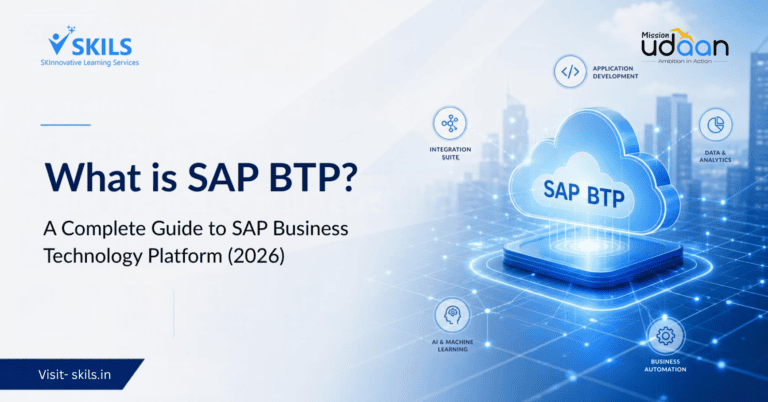
4. Explain SAP BTP and its use cases.
5. What is CDS View in SAP HANA?
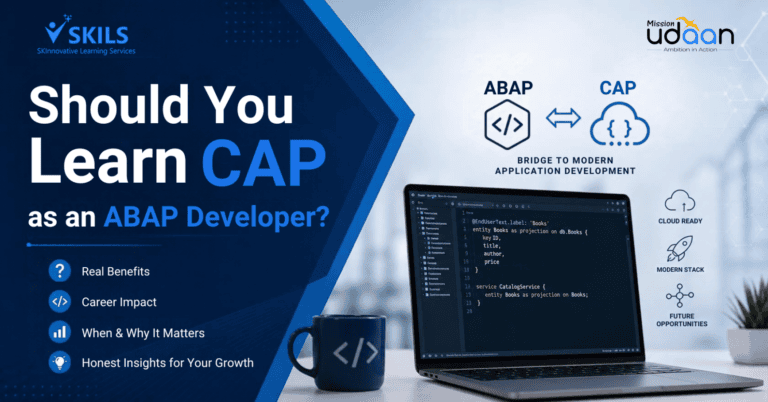
6. Difference between RAP and CAP.
7. Explain Embedded Analytics in SAP S/4HANA.
8. What is Output Management in SAP S/4HANA?
9. Difference between Workflow and Flexible Workflow.
10. Explain the SAP Transport Landscape (DEV → QA → PRD).
11. What is SAP Cloud ALM?
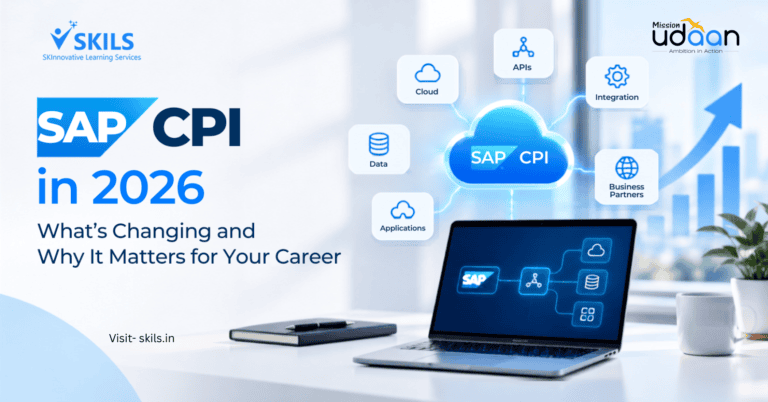
12. Explain SAP CPI integration scenarios.
13. What is Event Mesh in SAP BTP?
14. Difference between OData and REST APIs in SAP.
15. Explain BRF+ and its business use cases.
These questions are commonly asked in interviews for SAP FICO, MM, SD, ABAP. Basis, HCM, SAP BTP, and SAP S/4HANA roles and are useful for both freshers and 18 experienced candidates.
SAP Interview Preparation Guide 2026: How to Crack Your SAP Interview with Confidence- https://skils.in/sap-interview-guide/