SAP Interview Preparation Guide 2026
Picture this: you walk into your SAP interview room (or Zoom call), and instead of fumbling through textbook definitions, you calmly walk the panel through a pricing issue you once solved, T-code by T-code. That’s the difference between knowing SAP and being interview-ready for SAP — and it’s exactly what SAP Interview Preparation Guide 2026 will get you.
Landing a job in the SAP ecosystem is one of the smartest career moves you can make right now. Companies across finance, manufacturing, retail, and IT are racing to migrate to SAP S/4HANA, and that means one thing for job seekers: a massive spike in demand for skilled SAP professionals. But here’s the catch — SAP interviews aren’t like typical tech interviews. They test your functional knowledge, technical depth, and real-world problem-solving ability, all at once.
If you’ve been searching for a reliable SAP interview preparation guide, you’re in the right place. This blog breaks down everything you need — from foundational concepts to module-specific SAP interview questions and answers, insider tips, salary insights, and a preparation roadmap that actually works.
Let’s get you interview-ready — and career-ready.
Why SAP Skills Are in High Demand in 2026
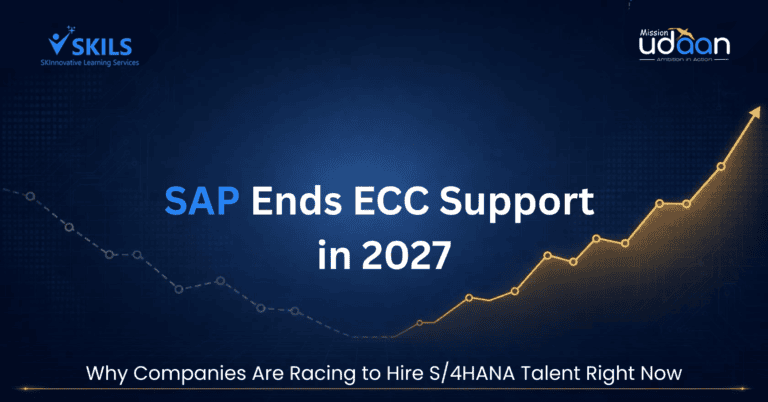
Before diving into preparation strategy, it helps to understand why this is such a smart career bet. SAP ECC’s mainstream maintenance is winding down, pushing enterprises firmly toward S/4HANA, Fiori, and cloud-based SAP solutions. This transition is creating a wave of hiring across every major SAP module — FICO, SD, MM, ABAP, and more.
Recruiters aren’t just testing textbook definitions anymore. They want to know if you can:
- Navigate real business scenarios end-to-end (like Order-to-Cash or Procure-to-Pay)
- Troubleshoot configuration and pricing issues on the fly
- Speak confidently about S/4HANA, Fiori, and cloud migration trends
- Apply your module knowledge to solve practical, on-the-job problems
That’s exactly why a structured, scenario-driven approach to interview prep matters more than memorizing question banks — and why a genuine SAP career strategy starts well before the interview itself.
The SAP Career Path: What’s Actually Waiting for You After the Interview
It helps to prepare with the end goal in mind. A career in SAP rarely stops at “getting the job” — it typically follows a clear growth curve:
- SAP Associate / Support Consultant – your entry point, usually handling tickets, configuration support, and testing.
- SAP Functional / Technical Consultant – owning a module (FICO, SD, MM, ABAP) end-to-end on live projects.
- Senior SAP Consultant / Team Lead – driving implementations, mentoring juniors, owning client relationships.
- SAP Solution Architect / Program Manager – designing landscapes across modules and leading large S/4HANA transformations.
An SAP consultant salary typically climbs fast with each of these stages, especially for consultants who pair hands-on module expertise with an SAP certification in S/4HANA. If you’re wondering how to become an SAP consultant, the honest answer is: nail the fundamentals, specialize in one module deeply, and let your interview performance open the door to the rest of this ladder.
Step 1: Understand the SAP Interview Structure
Most SAP interviews — whether for freshers or experienced professionals — follow a layered format:
- HR/Screening Round – Background, communication skills, and career motivation
- Functional/Technical Round – Core module concepts, configuration steps, and terminology
- Scenario-Based Round – Real business problems where you explain your troubleshooting logic
- Client/Managerial Round – Communication, stakeholder handling, and project experience
Knowing this structure helps you prepare in layers instead of cramming everything at once.
Step 2: Core SAP Concepts Every Candidate Must Know
Regardless of your specialization, interviewers expect a solid grip on SAP fundamentals:
- What is SAP? An ERP system that integrates core business functions — finance, sales, procurement, production, and HR — into a single platform for real-time data accuracy and process automation.
- SAP ECC vs S/4HANA: ECC runs on traditional databases with batch-heavy reporting, while S/4HANA runs on the in-memory HANA database, offering real-time analytics and a Fiori-based user experience.
- Three-tier architecture: Presentation layer (user interface), Application layer (business logic), and Database layer (data storage).
- SAP Fiori: The modern, role-based UI used across S/4HANA applications for a simplified, mobile-friendly user experience.
Interviewers often start here to gauge your baseline understanding before moving into module-specific questions — so don’t skip the basics, even if you’ve been in the field for years.
Step 3: Module-Wise SAP Interview Preparation
Your prep strategy should be tailored to your specific SAP module. Here’s a snapshot of the top SAP interview questions each track typically covers:
SAP FICO Interview Preparation
Expect questions on Company Code, Fiscal Year Variant, Chart of Accounts, GL postings, Credit Control, and Business Areas. Be ready to explain integration points between FI and other modules like SD and MM.
SAP SD (Sales and Distribution) Interview Preparation
Focus on the Order-to-Cash (O2C) cycle, pricing procedures, partner functions, distribution channels, and sales document types. Scenario questions often revolve around pricing not triggering correctly or delivery delays.
SAP MM (Materials Management) Interview Preparation
Be prepared to discuss Procure-to-Pay, pricing procedures, info records, tolerance limits, goods receipt reversals, and movement types. Experienced candidates should practice explaining root-cause troubleshooting for PO and invoice mismatches.
SAP ABAP Interview Preparation
Covers programming fundamentals — internal tables, SELECT statement optimization, ALV reports, SAP Scripts, and performance tuning techniques like binary search and buffer settings.
SAP Testing Interview Preparation
Focus on functional and regression testing across modules, IDocs/BAPIs/RFCs, Fiori app testing, and S/4HANA migration validation.
Insider Tip: Even if you’re a functional consultant, having a working knowledge of adjacent modules (like FI-MM or SD-FI integration) makes you stand out significantly — this is one of the fastest ways to differentiate yourself in a crowded SAP job market. |
Step 4: Master Scenario-Based Questions
This is where most candidates lose points — not because they lack knowledge, but because they can’t structure their answer. Interviewers love scenario questions like:
- “A sales order isn’t picking up the correct pricing. How would you troubleshoot it?”
- “Goods receipt was posted incorrectly. Walk me through your resolution steps.”
- “How would you optimize a high-volume Order-to-Cash process for performance?”
How to answer these confidently:
- State your diagnostic approach first (e.g., “I’d start by checking configuration in a logical sequence”)
- Walk through the steps methodically, using correct T-codes and terminology
- End with the resolution and how you’d prevent recurrence
This structured approach signals real-world experience, not rote memorization — and it’s often the single biggest differentiator between candidates with identical resumes.
Step 5: Practical Tips to Ace Your SAP Interview
- Practice out loud. Explaining concepts verbally, as if teaching someone else, builds real interview fluency.
- Get hands-on with a sandbox system. Even basic navigation experience with transactions makes your answers more credible.
- Research the company and role. Understand which SAP modules and industries the company works with, and tailor your prep accordingly.
- Stay current. Read SAP community blogs and stay updated on S/4HANA, Fiori, and cloud solution trends — interviewers notice when candidates are plugged into what’s current.
- Prepare your own questions. Asking thoughtful questions about the team’s SAP landscape or ongoing projects shows genuine engagement.
Step 6: Common Mistakes to Avoid
- Memorizing definitions without understanding real business context
- Ignoring integration points between modules
- Failing to mention S/4HANA and Fiori when discussing legacy processes
- Rushing through scenario answers instead of explaining your logical steps
- Not asking clarifying questions when a scenario is ambiguous
Your 7-Day SAP Interview Preparation Roadmap
Day | Focus Area |
|---|---|
Day 1 | SAP fundamentals, architecture, ECC vs S/4HANA |
Day 2-3 | Module-specific concepts (your specialization) |
Day 4 | Integration points with other modules |
Day 5 | Scenario-based and troubleshooting questions |
Day 6 | Mock interviews and sandbox practice |
Day 7 | Company research, resume review, and mental prep |
Final Thoughts: Turn Interview Prep Into a Long-Term SAP Career
Cracking an SAP interview isn’t about memorizing hundreds of questions — it’s about understanding how SAP solves real business problems and being able to communicate that clearly. Focus on your core module, stay current with S/4HANA and Fiori developments, and practice structuring your answers around real scenarios rather than definitions alone.
With consistent, focused preparation using this guide, you’ll walk into your next SAP interview with the confidence to turn your knowledge into an offer letter — and the first solid step of a long-term SAP career.
Ready to build your SAP skills further? Explore our SAP training programs at skils.in and take the next step toward your SAP career — whether you’re just starting out or aiming for your next promotion. Frequently Asked Questions (FAQs)Q1. How long does it take to prepare for an SAP interview? With focused daily study, most candidates can prepare effectively in 7-14 days, depending on their existing familiarity with the module. Q2. Which SAP module is best for freshers? SAP MM, SD, and ABAP are commonly recommended starting points for freshers due to strong entry-level demand and clearer learning curves. Q3. Are SAP interviews mostly technical or scenario-based? Modern SAP interviews blend both — expect foundational technical questions followed by scenario-based problem-solving discussions. Q4. Is SAP still a good career choice in 2026? Yes. With the industry-wide shift to S/4HANA and growing demand for cloud and Fiori expertise, SAP skills remain highly valuable across industries, and the SAP job market continues to expand. Q5. Does an SAP certification actually improve interview outcomes? It helps, especially for freshers with no live project experience — certification signals commitment and gives you a shared vocabulary with interviewers. That said, most experienced-hire interviews weigh real project and troubleshooting experience more heavily than certification alone. Q6. What salary can I expect after cracking an SAP interview? SAP consultant salary varies widely by module, city, and experience level, but SAP roles consistently pay a premium over generic IT roles because of the specialized, high-stakes nature of enterprise implementations. |